
How to Choose a Flooring Specialist in Central Scotland
Choosing a new wooden floor is a significant decision for any homeowner. The material, finish and installation method can influence how a room looks, feels and performs for years. In Stirling and across Central Scotland, where traditional stone properties sit alongside modern houses and extensions, the right approach often depends on the building itself. Finding a suitable flooring specialist is therefore just as important as selecting the boards.
Online research makes it easier to compare contractors, but a polished website alone is not proof of workmanship. This guide explains how to assess flooring companies, understand quotations and use digital information to make a more informed choice before committing to a project.
Start with the requirements of your property
Before contacting installers, consider how the room is used. A busy hallway experiences different wear from a bedroom, while a kitchen may be exposed to occasional spills and changes in humidity. Families with pets may prefer a finish that is straightforward to maintain. In a period property, retaining original features or matching existing timber may be particularly important.
Solid wood, engineered wood and laminate each have different characteristics. Engineered boards can offer greater dimensional stability than comparable solid timber boards, but suitability still depends on the product specification and installation conditions. Laminate can provide a practical alternative where budgets or maintenance requirements influence the decision. Ask the installer to explain the advantages and limitations of each option rather than recommending a product purely on appearance.
Look for evidence of relevant flooring experience
A useful contractor website should explain the types of flooring the company installs and the preparation involved. Photographs of completed work can help you understand the quality of finishing around doorways, skirting boards and changes in floor level. Look for examples that resemble your own property, particularly if you are considering a herringbone pattern or working with an older building.
Ask whether photographs show the company’s own installations or are illustrative product images. Both can be useful, but they serve different purposes. A product photograph demonstrates a style, whereas a genuine project photograph may help demonstrate workmanship. A contractor should be able to discuss the practical challenges of a comparable installation without relying entirely on marketing claims.
Understand what happens beneath the finished floor
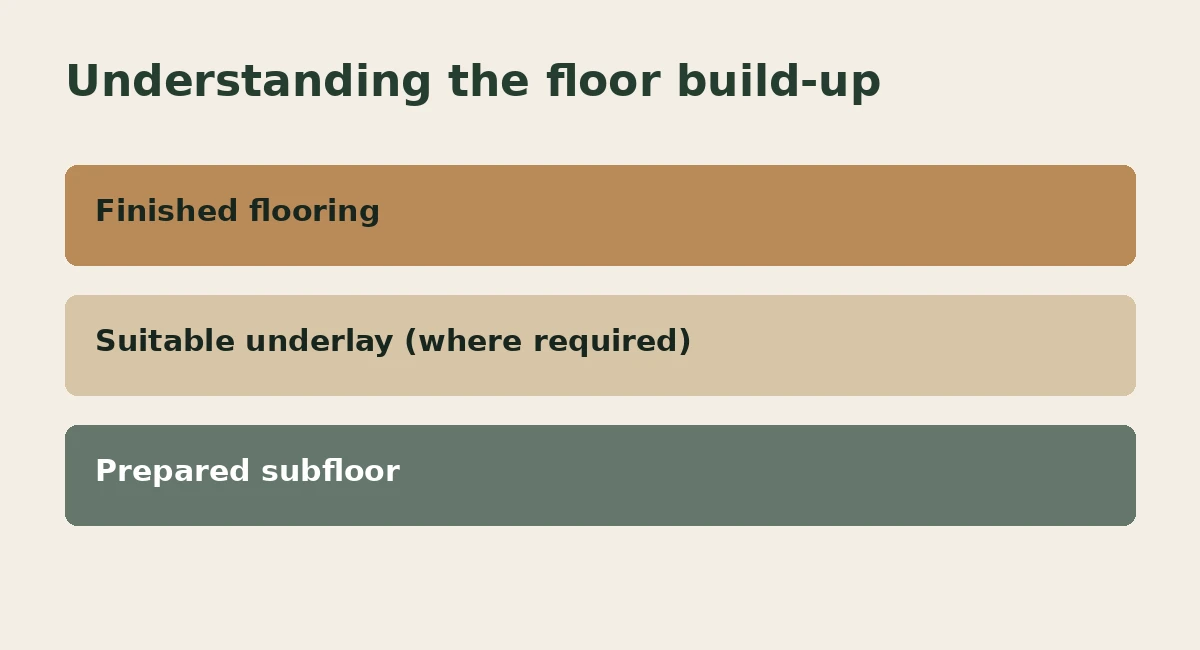
Subfloor preparation is one of the most important parts of a flooring project. Uneven surfaces, unsuitable moisture conditions or movement in existing boards can affect the finished installation. A competent assessment should consider the condition of the underlying structure and the requirements specified by the flooring manufacturer.
In older Scottish homes, suspended timber floors and previous alterations can introduce additional considerations. In newer properties, screeds and underfloor heating systems may require particular checks. Ask how the installer will assess moisture, flatness and compatibility before work begins. If remedial work is necessary, establish whether it is included in the quotation or will be priced separately.
Use Google Maps and local reviews intelligently
Google Maps can be a helpful starting point when searching for flooring fitters in Stirling, Dunblane, Bridge of Allan or surrounding communities. Business profiles often provide contact details, photographs, opening hours and customer feedback. Check whether the information agrees with the company’s website and whether the business actually serves your location.
Read a selection of reviews rather than concentrating only on the overall star rating. Comments about communication, punctuality, preparation and finishing can provide useful context. A recent review describing a similar project may be more informative than a short general recommendation. Remember that reviews represent individual experiences and cannot guarantee the outcome of your own installation.
Why a useful website matters for local trades
Flooring businesses benefit from explaining their services clearly online because homeowners frequently begin their research before making a telephone call. A well-organised website can answer questions about materials, installation methods, geographical coverage and the quotation process. Clear contact details also make it easier for customers to establish whether a contractor is suitable.
For independent flooring companies and other construction businesses, specialist guidance on local SEO for trades and small businesses can help them understand how to present accurate service information and improve the accessibility of their websites. The objective should be to connect customers with relevant, useful information rather than simply repeat search terms across numerous pages.
Search visibility is not a substitute for professional competence. A business appearing prominently in search results should still be assessed against its experience, references, quotation and ability to explain the proposed work. Equally, a smaller contractor with a modest online presence may have considerable practical expertise.
Compare quotations on a like-for-like basis
When comparing prices, check whether each quotation covers the same scope. One may include removal of existing flooring, disposal, preparation, trims and finishing, while another may cover installation only. Establish who supplies the boards and accessories, whether VAT applies and how unexpected work will be authorised.
Ask about the proposed installation method and any manufacturer requirements. Clarify arrangements for moving furniture, protecting adjacent rooms and managing access during the work. A written quotation should make it easier to identify what is included and reduce misunderstandings once the project begins. Avoid choosing solely on the lowest headline price when important preparation or finishing work may be excluded.
Plan for maintenance after installation
Every flooring material has its own care requirements. Obtain the manufacturer’s cleaning guidance and ask the installer about suitable products, protective pads and the management of moisture. Avoid assuming that a cleaning method suitable for tiles will also be appropriate for timber or laminate.
Discuss how the floor may be repaired or refreshed in the future. Some timber products can be refinished, subject to their construction and remaining wear layer, whereas others may require replacement of damaged boards. Understanding these differences before purchase helps you evaluate the longer-term cost of the flooring rather than just the initial installation price.
Make an informed final decision
The best starting point is a clear description of your project, followed by a conversation with an installer who understands the property and your expectations. Take time to compare written quotations, check relevant experience and establish how the finished floor will be maintained. Use online resources to narrow your choices, but base your final decision on the evidence available and the suitability of the proposed installation.
Whether you are renovating a traditional Stirling home or updating a modern living space, careful preparation and clear communication can make the process more predictable. A well-chosen floor should complement the property and meet the practical demands of everyday life.